
Yarning circles for medicines and health equity
Bridging the equity gap: scaling culturally safe yarning circles about medicines to reduce preventable hospitalisations
Within the Australian healthcare system, regional health commissioning is shifting toward preventive, community-led models of care. For Primary Health Network (PHN) managers and executives, the numbers tell a compelling story. According to the Australian Institute of Health and Welfare (AIHW), potentially preventable hospitalisations (PPHs) have a persistent impact on Local Hospital Networks (LHNs). Crucially, First Nations Australians experience PPH rates at roughly three times the rate of non-Indigenous Australians, with chronic conditions like type 2 diabetes, and chronic obstructive pulmonary disease (COPD) driving most of these presentations.
A significant contributor to this disparity is the persistent gap in health literacy and the safe, effective use of medicines. Clinical interventions alone often fail to achieve sustained medication adherence when they are not delivered in culturally safe and meaningful ways.
For PHN leaders seeking to meet Commonwealth KPIs and reduce equity gaps, addressing medication misadventure requires moving beyond passive information delivery. It calls for strategic investment in localised, culturally safe solutions, including the implementation of structured yarning circles about medicines (medicine yarning circles) that support shared learning, trust, and informed medicine use within communities.
The strategic imperative: health literacy, adherence, and LHN burden
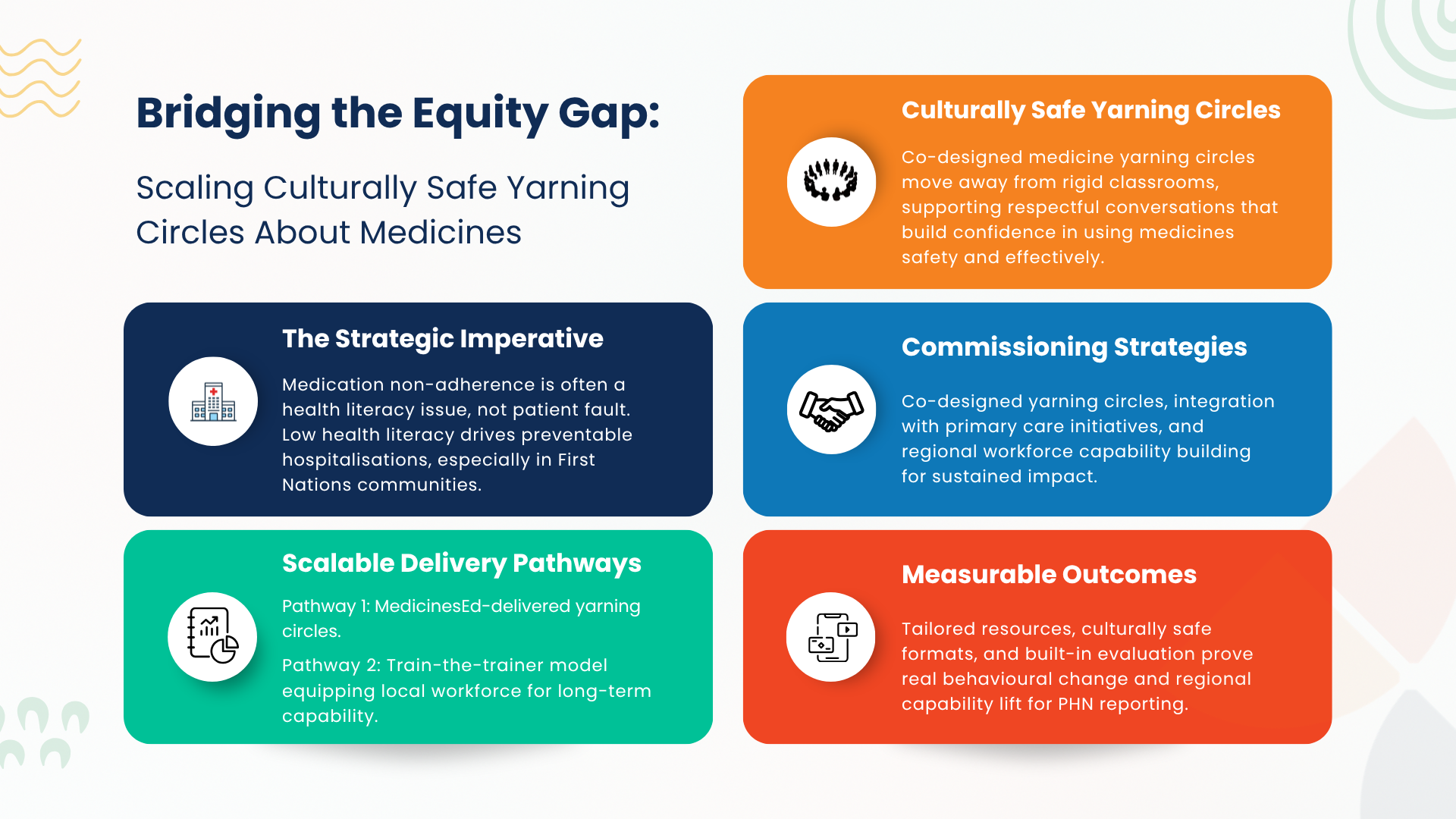
Rather than a deliberate choice by the patient, medication non-adherence is often a baseline health literacy challenge. In regional and remote communities, complex therapeutic regimens are frequently compromised by communication barriers, historical mistrust, and a lack of culturally adapted resources. When a patient cannot safely navigate their medication regimen, the trajectory can lead predictably to the emergency department.
The impact of low health literacy on chronic disease
For an individual managing multi-morbidity, low health literacy directly impairs the ability to recognise medication side effects, understand dosing schedules, or interpret pharmacy labels. In First Nations communities, this risk is compounded when western medical models fail to align with holistic definitions of health and wellbeing.
The economic and operational toll
The financial burden of medication-related hospital admissions on state health budgets is substantial. Data indicates that up to 20% of all hospital admissions among older Australians are medication-related, and most of these may be preventable. By shifting funding upstream into proactive, community-based health literacy programs, PHNs can directly alleviate frontline pressure on tertiary care.
Actionable commissioning strategies for PHN leaders
To strengthen community capability and maximise the impact of flexible funding investments, PHNs can consider incorporating the following structured initiatives into their annual activity plans. These project concepts are designed to support culturally safe engagement, improve medicine-related outcomes, and deliver measurable benefits for communities and the health system.
1. Co-designed medicine yarning circles
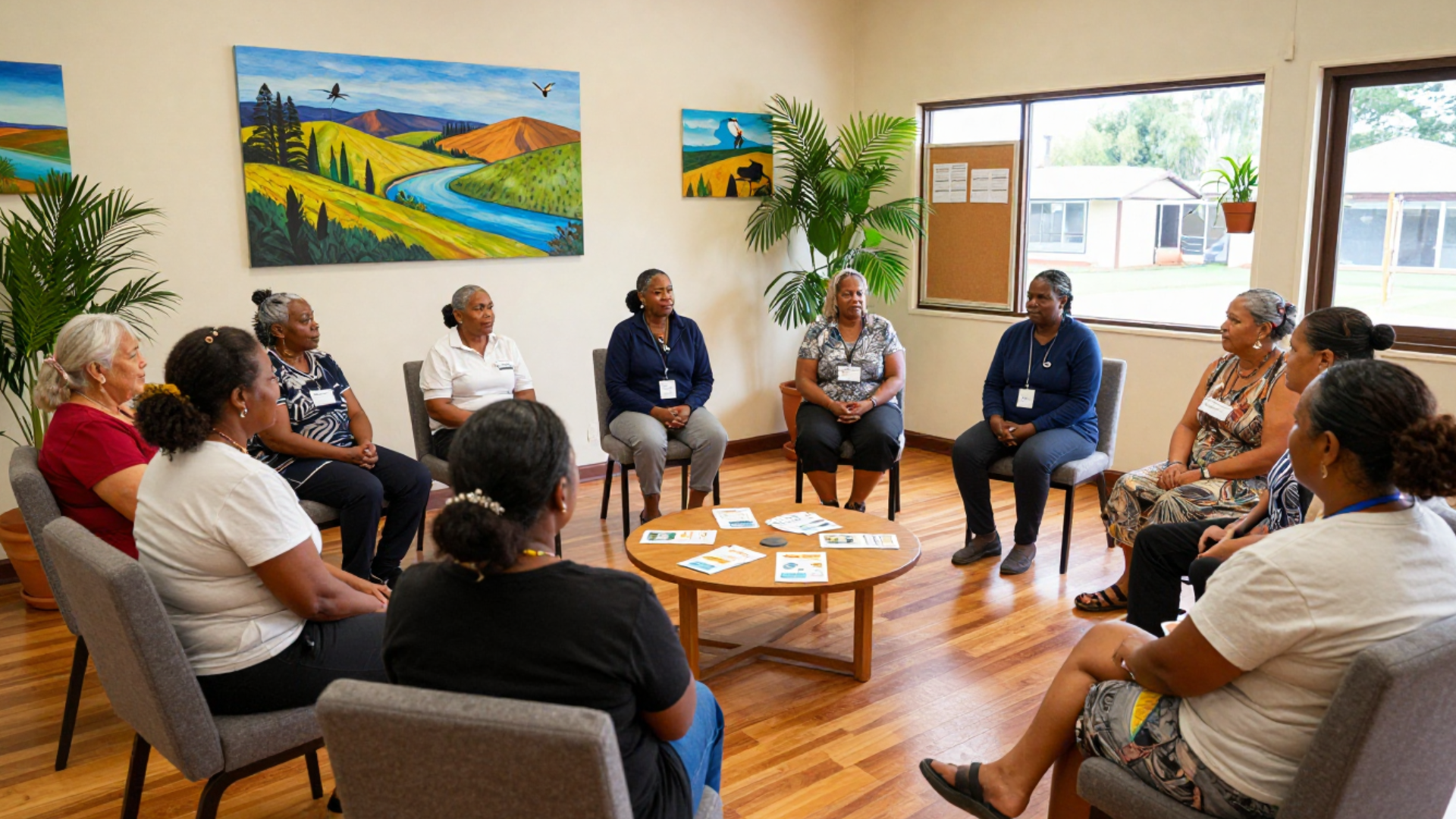
Implement localised, small-group yarning circles facilitated jointly by an Aboriginal Health Worker or Practitioner and a pharmacist. These sessions use storytelling and visual aids in a trusted, non-clinical environment, to help participants understand chronic disease medicines, manage them effectively, and recognise potential side effects
2. Integration with comprehensive primary care initiatives
Incorporate medicine yarning circles into Integrated Team Care (ITC) programs. These group education sessions serve as a way of building people’s confidence to engage more deeply with their local GP and community pharmacy and access services such as Aboriginal and Torres Strait Islander Peoples Health Assessments (MBS Item 715) and Home Medicines Reviews (HMRs).
3. Regional workforce capability building
Invest in training pathways to upskill local health professionals in a shared framework for delivering culturally safe education about medicines. This can include upskilling: pharmacists, general practice nurses, Aboriginal Health Workers and Practitioners.
MedicinesEd: a solution for behavioural change
Developing, testing, and implementing culturally safe health literacy programs from scratch requires significant time and regional resources. MedicinesEd provides a ready-to-commission solution that aligns precisely with PHN core objectives by offering two flexible delivery pathways designed to scale across your region:
Pathway 1: MedicinesEd-delivered yarning circles – High-quality, consistent and co-designed yarning circles delivered directly in your community by experienced consultant pharmacists. This pathway offers rapid implementation and immediate, measurable impact on consumer confidence.
Pathway 2: Train-the-trainer workforce capability model – A structured workforce development program that equips local pharmacists and primary care health professionals to run the yarning circles themselves. MedicinesEd provides fully developed delivery guides and training webinars to build sustainable, long-term local capacity.
Moving beyond generic fact sheets and static information, these pathways can strengthen the primary care workforce and shift daily health behaviours. The overarching methodology respects cultural protocols while delivering measurable, data-backed improvements in how priority populations navigate their medicines.
By commissioning MedicinesEd, PHNs gain an independent partner capable of delivering:
Tailored resources: Health literacy tools designed specifically for low-literacy and First Nations environments, removing clinical jargon.
Scalable delivery pathways: The choice between rapid, MedicinesEd-led consumer workshops or a structured train-the-trainer workforce model, allowing PHNs to flexibly scale health literacy programs across multiple locations to meet local population needs.
Measurable outcomes: Robust evaluation frameworks that capture shift-in-behaviour metrics, providing PHN managers with clear data to demonstrate KPI fulfillment to the Commonwealth.
Cultivating sustainable change
Shifting the focus from reactive hospital-based care to proactive, culturally safe preventive education empowers individuals with the knowledge, confidence, and skills to better manage their own health. By strengthening self-management and supporting informed decision-making, this approach promotes long-term health independence while helping to reduce avoidable demand on local hospital services.
Partner with MedicinesEd to co-design your next initiative
Looking to optimise your regional health outcomes and reduce preventable hospital presentations? Partner with MedicinesEd to co-design, implement, and evaluate targeted medicine yarning circles tailored to your PHN’s specific demographic priorities.
To explore how we can strengthen health literacy and workforce capacity across your region, please reach out via the contact details below:
Contact person: John Woodward (Director and Consultant Pharmacist)
Email: john@medicinesed.com.au
Phone: 0406 730 656
Web: www.medicinesed.com.au